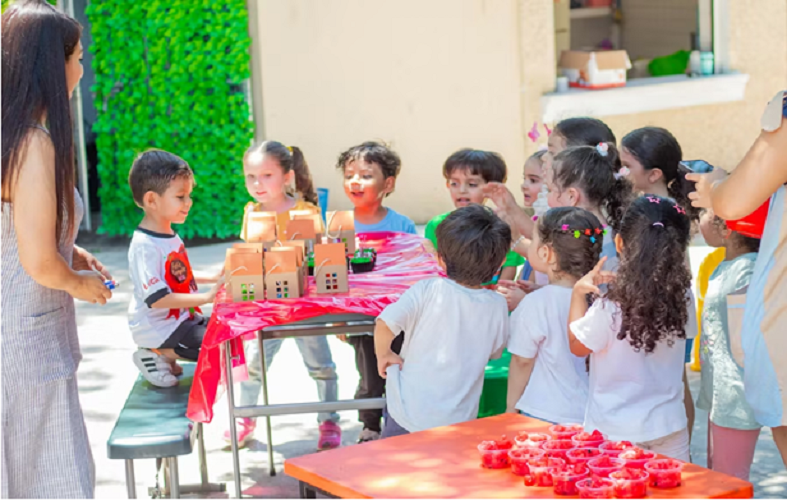
Children between the age of 2 and 8 years learn best through play. Play is not only a pause in the learning process, but it is how young children learn about the world around them. During the early years, children explore, imagine, experiment and express themselves primarily through play.
That is why effective early childhood education is based on play-based learning. Play-based learning in preschools assists children to develop the necessary academic, emotional, social and physical skills in a happy and stress-free manner.
Play-based learning at Mosaic International Preschool is carefully incorporated into daily life, so that children can have a great experience during their first school experience, and build solid foundations.
1. Understanding Play-Based Learning in Early Education
Play-based learning is a method of learning in which children learn by being guided in play, exploration and hands-on activities, as opposed to learning by instruction alone. It enables children to be active in their surroundings as they acquire the necessary skills in a natural manner.
Play-based learning in early education involves:
● Storytelling and role-play
● Blocks and puzzles.
● Music, movement and art activities.
These activities are well thought out so as to facilitate learning outcomes and at the same time giving the children the freedom to explore and have fun. This approach respects each child’s natural curiosity and pace of learning.
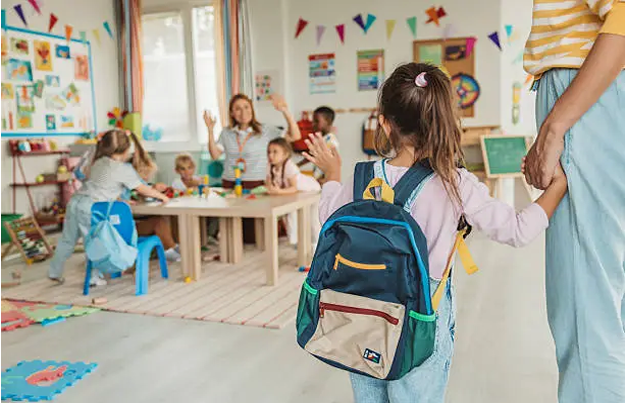
2. How Play Supports Brain Development and Learning
The brain of a child is very active during play. In play, children make choices, solve problems and experiment with ideas all of which facilitate cognitive development.
Play based learning assists children:
● Acquire early language and communication skills.
● Understand numbers, patterns and basic concepts
● Improve memory and concentration
As an illustration, block building will introduce simple mathematics and spatial awareness, and pretend play will enhance language and imagination. These experiences enable children to learn without straining and therefore comprehending is more profound and permanent.
3. Encouraging Creativity, Confidence and Independence
Play-based environments give children the freedom to express themselves. Children use their creativity and imagination through art, pretend play and open-ended activities.
Children are assisted by such experiences:
● Gain confidence through decisions.
● Express emotions safely
● Build self-confidence and self-reliance.
Children feel confident learners when they are motivated to explore without fear of making any mistakes. This trust is transferred to subsequent academic and social experiences.
4. Social and Emotional Growth Through Play
One of the most effective means through which children acquire social skills is through play. Group play educates children on how to socialize, collaborate and form relationships.
Children learn:
● Sharing and taking turns
● Communication and teamwork
● Knowledge of emotions and empathy.
Teachers are careful to facilitate these interactions and children learn how to manage emotions and acquire positive social behaviour. These social skills at an early age are the basis of healthy relationships in the future.
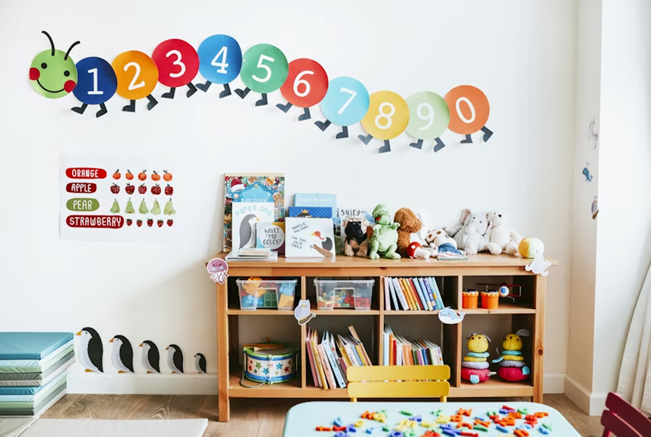
5. Play-Based Learning at Mosaic School
Play-based learning is central to the early childhood education of children at Mosaic School (2-8 years). The curriculum will be structured in such a way that it will combine learning objectives with fun activities so that the children are not bored.
The school concentrates on:
● Structured and guided play activities
● Healthy and challenging learning environments.
● Nurturing educators who notice and nurture every student.
Mosaic School is able to combine play with purpose in order to make sure that children grow academically, emotionally and socially and enjoy each moment of their learning process.
Learning through play is critical in the early childhood stage as it is a natural way of learning and development in young children. It promotes inquisitiveness, imagination, self-confidence and significant insight without coercion.
Children who learn to play will have a lifetime relationship with school.
In search of a playschool and preschool in Bhiwadi where learning is considered to be fun, interactive and child-centered?
Visit Mosaic School or call us today to find out more about our play-based early education programme and admissions.
Read Also: The Role of Teachers in a Child’s Early Education Journey