Tag: School

  • How to Choose the Right Preschool in Bhiwadi – A Simple Guide Every Parent Should Read

    How to Choose the Right Preschool in Bhiwadi – A Simple Guide Every Parent Should Read

    Introduction: That One Question Every Parent Has

    You know as a parent how confusing school visits are.

    It feels great for a few moments when you walk into an environment with colorful walls, bright toys, and smiling teachers. Then, after you return home, the doubts start to grow. “Is this place really right for my child?”

    This is a situation I’ve witnessed many parents in Bhiwadi face. Some parents make a quick decision, relying on what they can see. Some take weeks to decide, even after asking many questions and visiting several schools in Bhiwadi.

    It’s not all about the classrooms being colorful or good marketing. It’s all about the environment, safety and trust for your child.

    Let’s discuss a few simple but important things. These things should not be avoided.

    1. Don’t Just Look at the Building – Check If It’s Approved

    Many parents are not aware that only some schools are authorized to operate.

    Just because a school looks good from the outside does not mean they meet all of the required standards. The Rajasthan Education Department should be the authority that grants or accredits a quality preschool located in Bhiwadi.

    The following questions should be asked by you when visiting preschools in Bhiwadi:

    • Is your school accredited?
    • May I see the certificates?

    All legitimate preschools will have no trouble showing you their credentials.
    2. The Space Matters More Than Decoration

    Sometimes, small spaces are decorated so nicely that they look perfect in photos.

    But when children spend 4–5 hours there every day, space becomes important. Children must be able to run, play and explore.

    An acceptable Bhiwadi preschool offers:

    • Open and safe areas for activities
    • Classrooms that are not crowded
    • Proper ventilation and natural light

    I once visited a school where everything looked attractive – bright walls, cute charts – but the classroom felt tight. Kids were sitting too close, and there was barely any space to move around.

    It didn’t feel right.

    Children learn better when they feel free, not when they are sitting in cramped corners.

    3. Safety Is Not Optional – It’s Basic

    Never compromise on safety, I tell all parents.

    The following are essential for a school:

    • A Building Safety Certificate
    • A Fire Safety Certificate

    They are not optional features. These are not extra features. They are essential requirements of the Right to Education guidelines.

    Problem is, many parents do not ask these questions. Some schools do not mention these things either.

    Take it as a warning if a school does not answer your questions or answers them in a way that is unclear.

    Your child’s safety comes first.

    4. Not Every Setup Is Meant for Children

    Some schools are run from temporary or small spaces, such as rented homes.

    It may look okay at first. When you dig deeper, it raises questions.

    • The building is designed for children.
    • Is there a proper safety exit?
    • There is enough space to park?

    The preschool in Bhiwadi shouldn’t feel like an old house. It should feel as if it was made just for kids.

    Children are very active. Kids are active. They run, they jump, and they explore. They need an environment which supports their energy in a safe way.
    A Small Real-Life Scenario

    Let me share a simple example.

    A parent I know had to choose between two schools in Bhiwadi.

    The first one looked very attractive – modern interiors, lower fees, and close to home. The second one was slightly farther and simpler in appearance.

    At first, they almost finalized the first option.

    But during a second visit, they noticed something – the building was small, and there was no clear information about safety certificates.

    So they visited the second school again. It wasn’t flashy, but it had open space, proper classrooms, and clear documentation.

    They chose the second one.

    A year later, they told me, “We didn’t choose the most attractive school. We chose the one that felt right.”

    That one decision gave them peace of mind.

    5. A School Should Feel Safe, Not Just Look Good

    It’s often said that we need to check things off of a ‘to do’ list, but how does this place make you feel?

    As you enter into a preschool for your child in Bhiwadi, consider the following:

    • Do the teachers interact warmly with children?
    • Do kids look comfortable and happy?
    • Does the environment feel calm and organized?

    You don’t need to overthink. Your instinct as a parent is powerful.

    If something feels off, it probably is.
    A Thought About Mosaic International Preschool

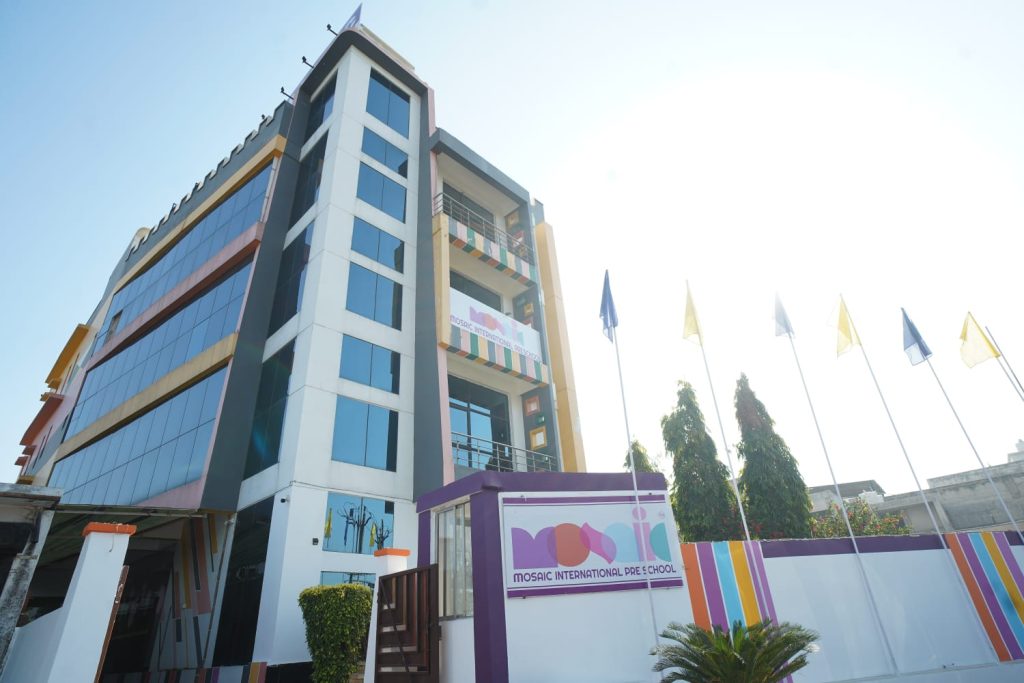
    While exploring different schools in Bhiwadi, many parents come across Mosaic International Preschool.

    What stands out here is not loud promotion, but a focus on basics done right.

    From what parents often share:

    • The school follows proper government norms
    • The building is structured and safe
    • Classrooms are spacious and ventilated
    • Safety certifications are maintained

    More than anything, it tries to create a calm and secure environment for children.

    Of course, every parent should visit and decide for themselves. But it’s always reassuring when a school focuses on safety and structure, not just appearance.

    Conclusion: Take Your Time – It Really Matters

    Choosing a school for your child is a big decision. It can affect their future. Here are some important things should be considered:

    • The school should have valid government recognition/affiliation from the Rajasthan Education Department  
    • The school must operate in a properly approved building, not temporary or unsafe premises  
    • Availability of Building Safety Certificate & Fire Safety Certificate is essential  
    • Classrooms should be spacious, ventilated, and child-friendly  
    • Proper open space for children’s activities and safety  

    These are not just formalities – they are mandatory requirements under the Right to Education Act for the safety and well-being of every child.

    We would also like to make parents aware that:

    Some schools may be operating from small rented premises without proper safety certifications or required infrastructure. Such setups may not fulfill government norms for affiliation and student safety.

    • We are proud to share that Mosaic International Preschool:
    •  Has fulfilled all government norms and requirements  
    • Operates in its own well-structured building  
    • Provides safe, ventilated, and spacious classrooms  
    • Maintains all required safety certifications  
    • Offers a secure and nurturing environment for children  

    We encourage all parents to verify these important details before finalizing admission anywhere.

    You may also confirm school recognition from the local education office for complete transparency. Your child’s safety and future should always come first.

    So don’t rush.

    Visit a few schools in Bhiwadi. Ask questions. Observe quietly. Trust your instincts. And most importantly – don’t get influenced only by looks or convenience.

    You’re choosing a safe space for your child to grow.

    Read Also: How Activity-Based Learning Helps Young Children Learn Better
  • How Activity-Based Learning Helps Young Children Learn Better
    How Activity-Based Learning Helps Young Children Learn Better
    Childhood is an exploring age. From the moment they start to walk and talk, they learn through touching, observing, questioning and experiencing the surrounding world. This is what makes activity-based learning the core of early learning particularly among children between 2 and 8 years.

    In a child’s first school experience, playschool or preschool learning should feel joyful, safe, and engaging. Activity-based learning at Mosaic International Preschool helps children to learn concepts in a natural way and develop confidence, curiosity and a passion to learn.

    1. What Is Activity-Based Learning in Early Education?

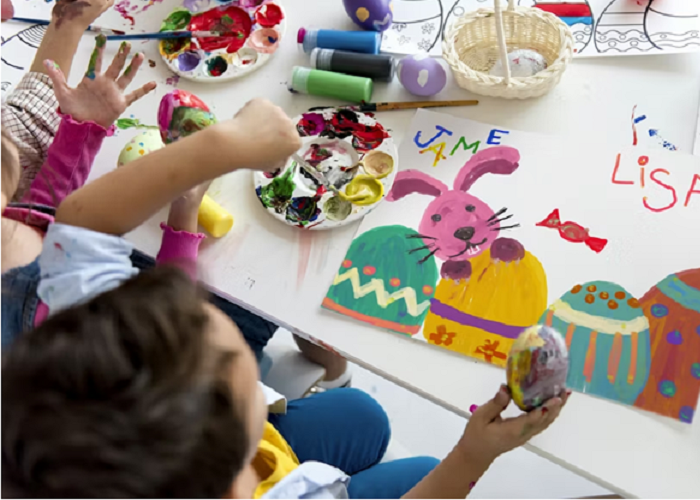
    Activity based learning in early education is based on learning through play, movement, creativity and hands on experiences as opposed to formal learning or memorisation.

    Children are not sitting and listening long hours, but they learn through:

    ● Games and activities based on play.

    ● Story telling, rhymes and music.

    ● Art, craft and exploration of senses.

    This method will enable the young children to be directly involved in the learning process thus learning becomes meaningful and enjoyable. It also facilitates various learning styles and enables children to learn at their own pace.

    2. Better Understanding and Long-Term Learning 

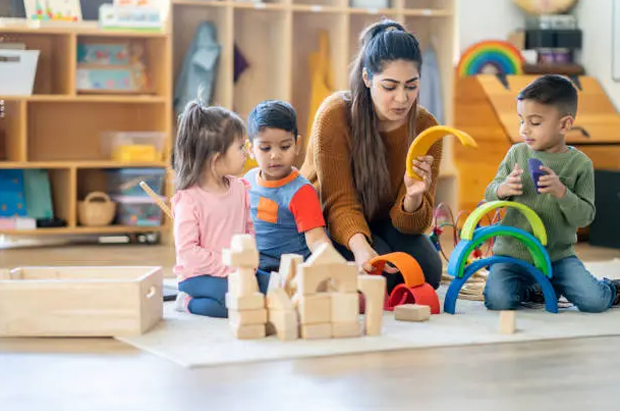
    In situations where young children are engaged in the learning process, they learn better and retain the knowledge longer. Role play, sorting games, storytelling and learning with objects are some of the activities that enable children to relate ideas with real life experiences.

    For example:

    ● Learning counting with toys or blocks.

    ● Learning language with the help of stories and songs.

    These methods help children:

    ● Visualise concepts easily

    ● Improve memory and recall

    ● Study without stress or anxiety.

    This soft method instills confidence at a young age and makes the learning process a pleasant experience at an early age. This more profound knowledge minimizes the learning stress and creates academic confidence at a tender age.

    3. Encouraging Creativity and Independent Expression 

    Activity-based learning provides freedom to young children to express themselves. Imagination and originality are acquired through imaginative activities like drawing, painting, music, movement and pretend play.

    This type of learning will help children to:

    ● Explore ideas freely

    ● Make choices independently

    ● Be able to express thoughts and feelings.

    Early education can foster the development of curiosity and confidence traits in children by enabling them to explore and develop new ideas, which can be used throughout their lives and further development.

    School in Bhiwadi allow children to develop curiosity and innovation skills that are necessary in life long learning by allowing them the freedom to experiment and express themselves.

    4. Building Social and Communication Skills Early 

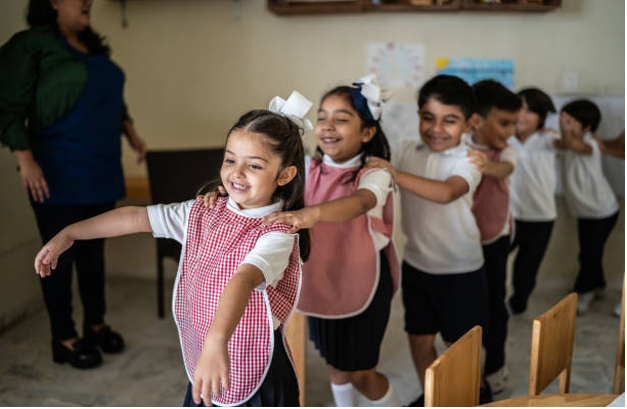
    A lot of the learning activities based on activities include group games and activities. Such interactions assist the young children to acquire the necessary social and communication skills in a natural and supportive manner.

    Children learn: through group activities, they learn:

    ● Sharing and taking turns

    ● Receiving others and responding to them.

    ● Collaborating and making friends.

    Such social interactions enable the children to acquire emotional intelligence and develop good interpersonal skills at an early age.

    5. Activity-Based Learning at Mosaic School 

    Activity-based learning is carefully incorporated into the routine of day-to-day preschool and early education at Mosaic International Preschool. The lessons are planned to be a combination of learning and playing, being creative and exploratory. Teachers also take children through activities which are age-related and also offer emotional support and attention.

    This method will make sure that children feel secure, active and interested during their day. Mosaic School builds a happy and supportive atmosphere by integrating the ideas of early learning with hands-on activities and thus, it becomes the first school that a child experiences positively.

    The activity based learning assists the young children to go beyond the memorisation and learn to comprehend the world surrounding them. This method is effective, enjoyable and meaningful to early education as it involves the mind, body and emotions.

    Children who get the impetus to explore, play and interact, get confidence, curiosity and real interest in learning, which is the foundation of future academic and personal success.

    Looking to find a playschool and preschool where learning is child-centred and interactive?
    To find out more about our early education and activity based learning programme visit Mosaic School or call us today.

    Read Also: How to Select the Right Early Education School for Your Child

  • How to Select the Right Early Education School for Your Child

    How to Select the Right Early Education School for Your Child

    The first school of your child is one of the greatest decisions that you will ever make as a parent. The initial years between ages 2 and 8 are the years during which children have the initial impressions of learning, school and social interaction. 

    The good beginning in playschool, preschool in Bhiwadi and early primary years develops confidence, curiosity and emotional safety. The right early education school is not just teaching alphabets and numbers. 

    Here are some tips for choosing the right school:

    1. Focus on Basics, Not Pressure

    During the early years, education should be based on establishing good foundations and not academic stress. Those children between the ages of 2-8 learn well when the concepts are introduced at an age appropriate way.

    An effective early education school is one that focus on:

    ● Learning concepts rather than memorising.

    ● Early literacy, numeracy and communication development.

    ● Promoting inquisitiveness and inquiries.

    When children learn at an early age, they gain confidence and  enjoy going to school.

    2. Safe and Caring Environment

    Playschool or preschool in Bhiwadi is the first home away experience to many children. 

    Find a school that offers:

    ● Nurturing, loving and understanding teachers.

    ● A relaxed and friendly classroom atmosphere.

    Children who are emotionally safe are more confident, expressive and willing to learn and interact socially.

    3. Importance of Play-Based and Activity-Based Learning 

    Learning in early education is based on play. Children learn better when they are able to explore, move and play.

    An effective early education programme balances learning with:

    ● Play-based learning and activity-based learning.

    ● Art, music, movement and narrative.

    ● Practical exploration and team work.

    This practice can help children:

    ● Study by experience.

    ● Learn to be creative and imaginative.

    ● Develop social and problem-solving skills.

    Play-based learning is the way to achieve holistic development without stress and pressure.

    4. Role of Teachers and Individual Attention 

    The teachers are very important in the first school experience of a child. During early education, children require instructions, support and special care.

    A good playschool or preschool will guarantee:

    ● Experienced and caring teachers.

    ● Small student-teacher ratio to be attended to.

    ● Free communication with parents.

    When teachers are aware of the pace and personality of each child, they make the children feel confident, valued and motivated to learn.

    5. Why Mosaic School Is the Right Choice for Early Education 

    Mosaic International Preschool is an early education center that is based on the needs of young children between the ages of 2-8 years. Being the first school attended by a child, Mosaic focuses on a safe, happy, and caring environment.

    The school offers:

    ● Good background education.

    ● Play-based teaching and activity based teaching.

    ● Social and emotional development.

    ● Nurturing educators and a child-centered campus.

    At Mosaic School children can learn naturally when they are happy and secure. Every child is left to explore, express and grow at their own pace. 

    Read also: A Day in the Life of a Preschool Student at Mosaic School

  • How to choose the right preschool

    How to choose the right preschool

    The most daunting question for every parent is, “So, have you decided your child’s preschool?”

    Already!! But he is so young for this.

    “I don’t think she is ready yet”.

    “I can teach him myself”.

    “I don’t want to pressurize my child this early”.

    This sounds familiar? Preparing for the first step of your child’s academic journey is often the most overwhelming decision for every parent. Separating little ones from the comfort of their home for the very first time, it’s the toughest decision for all the parents. Separation anxiety is real for both of them. But the importance of right preschool environment in shaping the future of a child; this decision becomes even more significant.

    Because gone are the days when a preschool was a waiting room for children not yet age-eligible for regular school admissions. Extensive researches in the field of early education have shown how crucial first 6 years of life are.

    But again the biggest question is, HOW TO CHOOSE A RIGHT PRESCHOOL?

    Should I go for the “Famous” ones? Or Should I go for the one with big building & high-tech classrooms with smart boards? Should I go for the most affordable with lesser fee?

    Parents often are more concerned about the comfort & care given by the caregivers/didis in the class than actual curriculum. Because as a parent, you always want the best for your child but what exactly is the best when it comes to preschool environment?

    As an early education enthusiast, I will share few points along with facts from researches in the field of early education, which I feel all parents should look for in a preschool.

    1.>DO NOT ENROLL YOUR CHILD BEFORE THE AGE OF 3 IN A NURSURY CLASS.

    The right age for a nursery class is three years. There is class before nursery which is called play school/play group but if your child is being admitted in a preschool directly for the first time your child should be minimum three years. Don’t try to save 1 year of your child. Please remember older the child in a class the better the performance so the child should be 3 years in a nursery, 4 year in Jr KG, 5 year in Sr KG, and  6 years when your child comes to grade One. Any school which tells you otherwise is not worth it. There are schools which also have playgroup sections for children below the age of 3, choose that class if you want to enroll your child who is not 3 years old yet.

    2.>Which board to choose?

    Many parents ask which board we should choose when choosing the school for our child. Well, every board has its plus points and negative, so in preschool choosing a board is not important what’s important is choosing the school based on its approach/ methodology. How child centric is the curriculum, which pedagogy they follow, who is leading that school. Because in early years pedagogy/methodology play HUGE role in developing child’s learning abilities.

    3.>FEE

    Many parents talks about fee. Because of course money is important. I don’t think its fee you should look at. You should look, if the school has very high fee then what it is the school promising you for their high fee. Ask them & ensure that the school delivers on those promises. If the school has very low fee that’s also not very good because low fee means only 2 things either teachers’ salaries are low or the kind of equipment and materials your child will use, will not be up to the mark. So when it comes to fee, it’s not about high or low, it’s about whether you are getting your money’s worth or not.

    4.>Environment

    By environment I mean the ambiance of the school. Are classrooms equipped to instigate child’s curiosity? How well is student safety kept in consideration? Are play equipments children friendly? Apart from being visually attractive, basic hygiene or safety, and technologically enhanced amenities should also be looked for. A good preschool should offer the kids an environment to run, climb, jump and play; so that they can develop while they build, mould, break and observe.

    5.>The parents & teachers

    The most critical question is, are the preschool facilitators trained professionals equipped with necessary knowledge and experience to enhance a child’s overall development? As a parent you can consider how parent centric the school is? What is the total strength? Preschools with over 250 children can become crowded for your child. For bigger schools, even 1000 students in a premises work very well but little child who is just about to start his learning journey, lesser is always better.


    These are few criteria; you can start your preschool search with. Hope this helps parents to take their decision.  For your child, please remember that choosing the right preschool is giving your child the right start for life.  Let’s remember what Maria Montessori said, she said, it’s not the age of university studies which is important, it is the age between the years of birth to 6 years, so when you are choosing your  child’s preschool, you are actually choosing your child’s foundation for life.